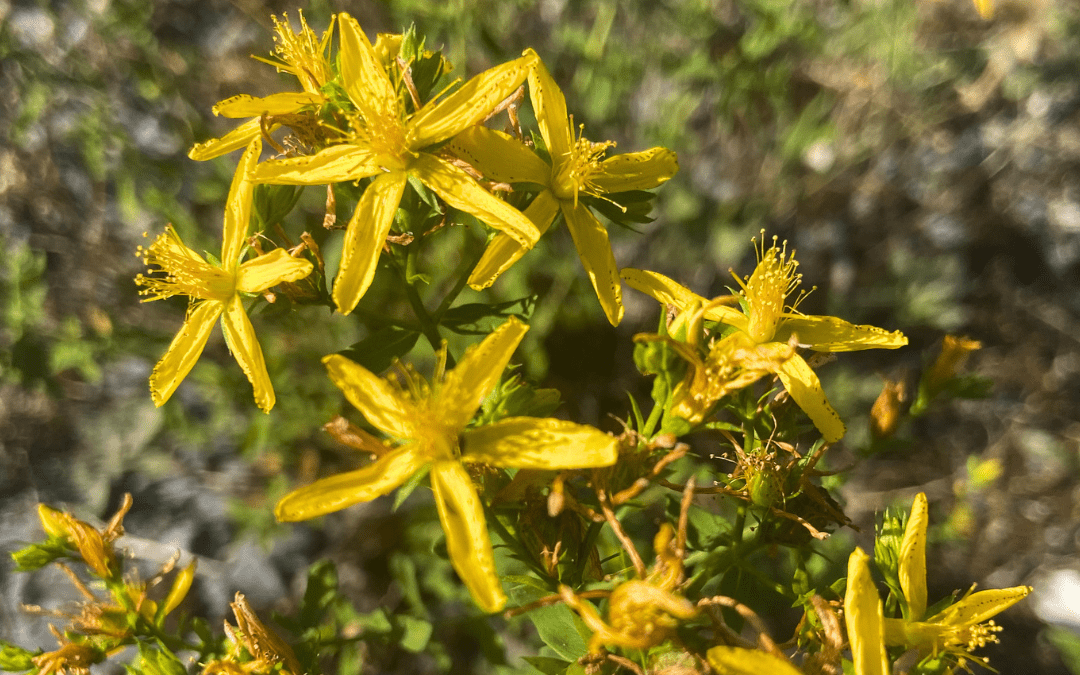
St. John’s wort (Hypericum perforatum) is best known as a nervous-system and mood-support herb. Its main benefits are in mild to moderate low mood, nervous tension, and mood-related sleep disturbance — but it has major herb–drug interaction concerns, so it needs to be used carefully.
Main Benefits
1. Supports mild to moderate depression
This is its strongest researched use. St. John’s wort appears more effective than placebo and may be similar in effect to standard antidepressants for mild to moderate depression, though evidence is less clear for severe depression or use beyond about 12 weeks. (NCCIH)
2. Helps mood balance and emotional resilience
From an herbal medicine perspective, it is often considered a nervine trophorestorative — meaning it helps restore and support irritated, depleted, or overburdened nervous tissue over time. It may be useful when low mood is paired with nervous exhaustion, sensitivity, or burnout-type patterns.
3. May help sleep disturbance linked to mood imbalance
Health Canada recognizes St. John’s wort as used in herbal medicine to help promote healthy mood balance and help relieve sleep disturbances associated with mood imbalance. (Health Canada)
4. May reduce nervousness and restlessness
Traditional herbal use includes support for restlessness, nervousness, and mental stress. The European Medicines Agency lists St. John’s wort under traditional uses related to mental stress and mood disorders. (European Medicines Agency (EMA))
5. Possible support for menopausal hot flashes
There is limited research suggesting St. John’s wort may help with hot flashes associated with menopause, though this is not as strongly supported as its use for mild to moderate depression. (NCCIH)
6. Topical wound and nerve support
Traditionally, infused St. John’s wort oil has been used externally for minor wounds, bruising, nerve irritation, and sore tissues. EMA also lists traditional topical relevance for skin disorders and minor wounds. (European Medicines Agency (EMA))
Key constituents
Important constituents include:
Hyperforin — strongly associated with mood effects and neurotransmitter activity, but also strongly tied to drug interactions.
Hypericin and pseudohypericin — naphthodianthrones often used as marker compounds; contribute to photosensitivity risk.
Flavonoids — including quercetin, rutin, hyperoside, and others; contribute antioxidant and anti-inflammatory activity.
Tannins and phenolic acids — contribute astringent, wound-supportive, and tissue-toning actions.
Important cautions
St. John’s wort is not a casual herb if someone is on medication. It can reduce the effectiveness of many drugs, including birth control pills, antidepressants, blood thinners, HIV medications, transplant medications, some heart medications, some seizure medications, and some cancer medications. NCCIH specifically warns that it can cause serious interactions and may reduce the effectiveness of multiple prescription medicines. (NCCIH)
Do not combine it with SSRIs, SNRIs, MAOIs, or other antidepressants unless supervised by a qualified clinician, because it may increase serotonin too much and cause a serious reaction. (NCCIH)
Also, use caution with bipolar disorder, schizophrenia, severe depression, pregnancy, breastfeeding, and before surgery.St. John’s wort is one of the better-researched herbal medicines for mild to moderate depression and mood imbalance, and it also has traditional uses for nervous tension, mood-related sleep issues, menopausal symptoms, and topical tissue support.